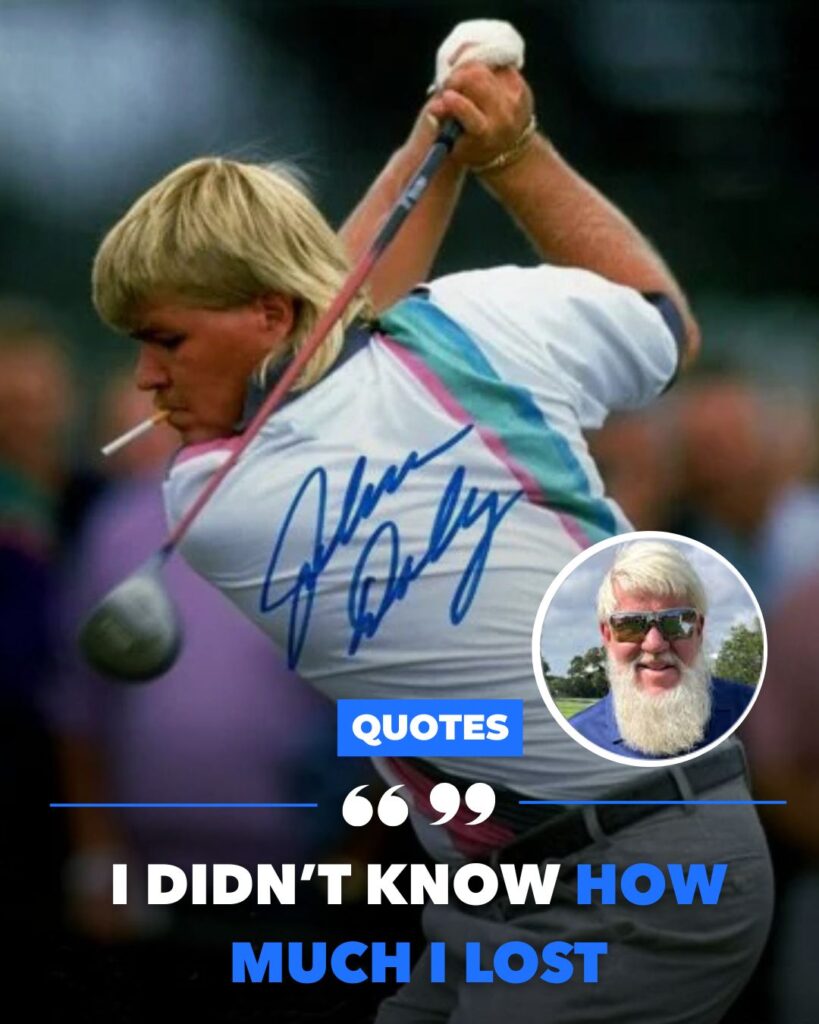
In the world of professional sports, few names carry as much weight or as much cautionary subtext as John Daly. Known for his towering drives and “zero-filter” personality, Daly took the PGA Tour by storm in the early 90s. But while his talent on the green was undeniable, his battles off the course became the stuff of legend for all the wrong reasons.
The $55 Million Gamble Daly famously admitted in various interviews and his autobiography that he blew through an estimated $55 million to $57 million over fifteen years. Much of this was lost in high-stakes gambling sessions, including a notorious incident in 2005 where he lost $1.65 million in just five hours after a playoff loss to Tiger Woods.
The most staggering aspect of Daly’s financial struggles was his gambling habit, which he candidly discussed in his autobiography. He famously recalled a period where he would lose millions in a single sitting, often heading to the casino immediately after a tournament to chase the adrenaline high of the competition. This pattern of behavior highlights a common pitfall for elite athletes: the “invincibility mindset.” The same fearless risk-taking that allows a golfer to go for the green on a par five can lead to devastating consequences when applied to personal wealth management and long-term financial security.
Despite these setbacks, Daly’s story has taken a turn toward resilience and brand longevity. In recent years, he has rebuilt his financial standing by leveraging his cult-hero status into successful ventures in golf course design, music, and merchandise. He has become a staple on the PGA Tour Champions circuit, proving that while money can be lost, a brand built on authenticity can provide a second act. His journey from the peak of financial excess to a more grounded, diversified business model offers a vital lesson: it is never too late to shift gears and start prioritizing the finish line over the immediate thrill.